
Case studies
Training exporters to use the AfCFTA
The context
The How to Export with the AfCFTA training programme is developed and delivered by the International Trade Centre in partnership with the African Export-Import Bank (Afreximbank). It exists for African enterprises that want to improve their competitiveness and meet the demands of African consumers — and its wider purpose is to make the African Continental Free Trade Area operational in practice, with enterprises equipped to take the market access it offers.
That last point is the whole difficulty. The AfCFTA brings together the 55 member states of the African Union and eight Regional Economic Communities to create a single continental market of roughly 1.3 billion people and a combined GDP of around US$3.4 trillion. None of that reaches a manufacturer in Ouagadougou unless somebody explains the rules of origin, the documentation and the procedure — and unless local institutions can keep explaining them after the programme ends.
The particular problem in Burkina Faso
Burkina Faso is landlocked. Every import and export depends on the port and corridor infrastructure of Côte d’Ivoire, Togo or Ghana, and that dependency adds cost to every consignment before any commercial decision is made.
For Burkinabè exporters, corridor choice is not a logistics detail. It is one of the largest variables in whether a product is competitive at destination — which makes it a subject that has to be taught explicitly rather than assumed.
What we did
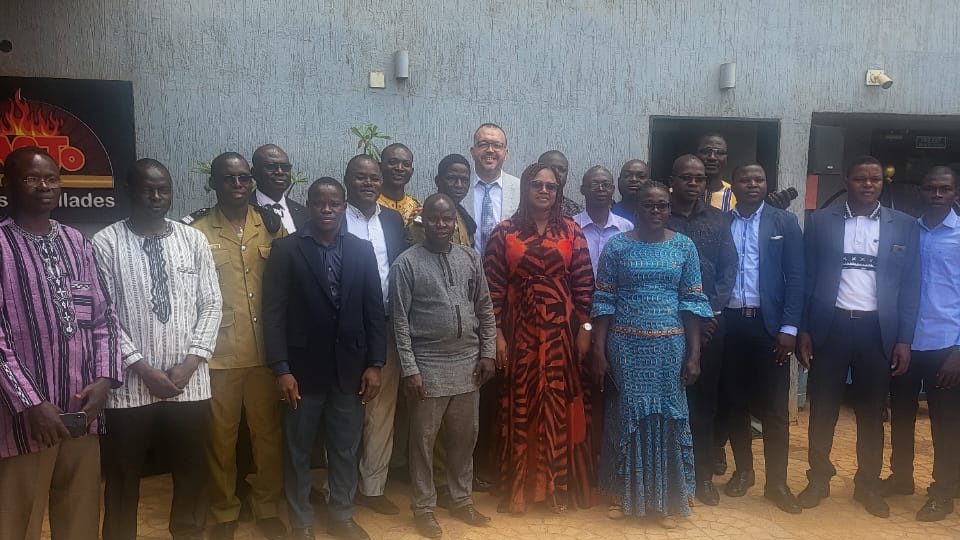
Over four days, from 18 to 21 September 2023, our senior consultant Ilyas Choubaili trained two audiences in parallel:
- Trainers representing local partner institutions — the people who would carry the programme forward after the week ended
- Small and medium-sized enterprises preparing to export
The material focused on exporting processes and procedures, and on identifying the specific opportunities the AfCFTA opens for Burkinabè businesses.
The workshop used what the programme calls a new generation of capacity-building design: a hybrid model combining face-to-face sessions with online courses, built on a digital methodology. The intent is that the material remains available and usable after the trainers have left the country.
Why it matters to how we work
This mandate is a fair illustration of the firm’s position. It sits at the intersection of trade facilitation and training; it was delivered for international institutions but aimed at SMEs; and its design goal was transfer rather than delivery — training the trainers so the capability stays local.
Tell us what is actually happening.
Most engagements start with a problem that does not yet have a clean name. You do not need a brief, a budget or a defined scope to begin the conversation.
Start a conversation